Introduction
The comparison between 5G vs 4G has become increasingly important as mobile networks continue to evolve. For many years, 4G has provided the foundation for modern smartphone internet, video streaming, social media, mobile apps, online gaming, and cloud-based services.
Now, 5G technology is expanding across the world and introducing faster connectivity, lower latency, greater network capacity, and improved support for connected devices.
But is 5G always better than 4G? What are the real differences between these two mobile network technologies? And should you upgrade to a 5G device?
The answer depends on several factors, including your location, network coverage, device compatibility, internet needs, and budget.
In this article, we compare 5G vs 4G, including speed, latency, coverage, technology, benefits, disadvantages, real-world applications, and which network may be better for different users.
What Is 4G?
4G stands for the fourth generation of mobile network technology.
It represented a major improvement over previous generations and helped create the modern mobile internet experience.
4G made activities such as the following more practical:
- HD video streaming
- Social media
- Mobile apps
- Video calls
- Online gaming
- Mobile browsing
- Cloud services
Before 4G, mobile internet was generally slower and less capable of supporting high-quality digital experiences.
4G became an essential part of the smartphone revolution.
Main Benefits of 4G
4G offers several advantages:
- Wide availability
- Good mobile internet speeds
- Reliable connectivity
- Support for modern apps
- Lower device costs
- Established infrastructure
Even in 2026, 4G remains an important technology, especially in areas where 5G coverage is limited.
What Is 5G?
5G stands for the fifth generation of mobile network technology.
It is designed to provide improvements over 4G in several important areas.
These include:
- Faster potential data speeds
- Lower latency
- Greater capacity
- Better support for connected devices
- Advanced industrial applications
- Improved network efficiency
5G is designed not only for smartphones but also for technologies such as:
- Internet of Things devices
- Smart cities
- Connected vehicles
- Industrial automation
- Robotics
- Edge computing
5G vs 4G: The Main Differences
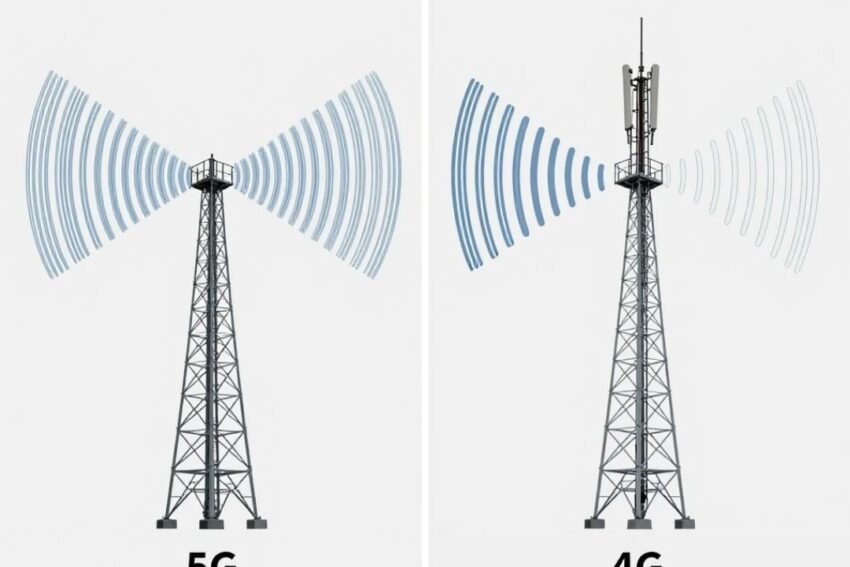
The biggest differences between 5G and 4G involve speed, latency, network capacity, and device connectivity.
| Feature | 4G | 5G |
|---|---|---|
| Generation | Fourth generation | Fifth generation |
| Speed | High | Potentially much faster |
| Latency | Higher | Lower potential latency |
| Capacity | Limited compared with newer technology | Designed for higher capacity |
| Device Support | Smartphones and mobile devices | Smartphones, IoT, machines and more |
| Applications | Mobile internet | Advanced connected systems |
| Infrastructure | Widely established | Expanding |
Actual performance can vary significantly depending on network conditions.
5G vs 4G Speed
Speed is one of the most noticeable differences.
4G Speed
4G provides sufficient speeds for many everyday activities, including:
- Browsing websites
- Streaming videos
- Social media
- Video calls
- Mobile applications
For many users, 4G remains fast enough for normal smartphone usage.
5G Speed
5G can provide significantly faster speeds under suitable conditions.
This can improve:
- Large file downloads
- High-quality video streaming
- Cloud applications
- Mobile gaming
- Data-intensive services
However, actual 5G speed depends on:
- Location
- Network infrastructure
- Frequency spectrum
- Device capability
- Network congestion
Therefore, users may experience different results in different locations.
5G vs 4G Latency
Latency is another important difference.
Latency refers to the delay between sending information and receiving a response.
For normal browsing, small differences in latency may not be noticeable.
However, lower latency can be important for:
- Online gaming
- Virtual Reality
- Augmented Reality
- Robotics
- Industrial automation
5G is designed to reduce latency compared with earlier mobile networks.
5G vs 4G Coverage
Coverage is one area where 4G may still have an advantage in many regions.
4G Coverage
4G infrastructure has been deployed for many years.
As a result, it is widely available across:
- Cities
- Towns
- Highways
- Rural areas
5G Coverage
5G coverage continues to expand.
However, availability can vary depending on:
- Country
- Mobile network operator
- City
- Local infrastructure
In some areas, users may have excellent 5G coverage, while others may rely primarily on 4G.
How Does 5G Work?
5G uses advanced wireless networking technologies and different spectrum bands.
These can include:
Low-Band 5G
Low-band spectrum can provide broader coverage and better signal penetration.
It is useful for reaching larger geographic areas.
Mid-Band 5G
Mid-band technology can provide a balance between:
- Speed
- Capacity
- Coverage
High-Band 5G
High-band spectrum can provide very high capacity and fast speeds.
However, it generally has shorter coverage distances and may require more network infrastructure.
5G vs 4G Network Capacity
The number of connected devices continues to grow.
People now use:
- Smartphones
- Smartwatches
- Smart TVs
- Security cameras
- Smart speakers
- Connected vehicles
Businesses also use large numbers of connected sensors and devices.
5G is designed to support greater network capacity.
This can become increasingly important as more technologies connect to wireless networks.
5G and the Internet of Things
One of the biggest advantages of 5G is its potential role in the Internet of Things (IoT).
IoT refers to physical devices connected to networks.
Examples include:
- Smart home devices
- Industrial sensors
- Smart meters
- Security systems
- Connected vehicles
5G can help support large ecosystems of connected devices.
4G and Everyday Smartphone Users
4G remains suitable for many users.
You can comfortably use 4G for:
- Social media
- Video streaming
- Messaging
- Web browsing
- Online shopping
- Video calls
If you mainly use your smartphone for standard daily tasks, 4G may still provide a good experience.
5G and Advanced Applications
5G becomes more valuable for advanced technologies.
Potential applications include:
- Cloud gaming
- Virtual Reality
- Augmented Reality
- Industrial automation
- Smart cities
- Advanced IoT
- Connected systems
These technologies may benefit from faster communication and lower latency.
5G vs 4G for Gaming
Online gaming depends on several factors.
These include:
- Latency
- Connection stability
- Server location
- Device performance
5G may provide lower latency under suitable conditions.
This could improve some mobile and cloud gaming experiences.
However, a stable 4G connection can still provide good gaming performance.
5G vs 4G for Video Streaming
Both networks can support video streaming.
4G
Generally suitable for:
- Standard video
- HD streaming
- Social media video
5G
Can potentially provide better support for:
- Higher-quality streaming
- Large video downloads
- Multiple connected devices
Actual performance depends on the network connection.
5G vs 4G for Cloud Computing
Cloud computing allows users to access digital services through remote servers.
5G can improve mobile access to cloud platforms.
Potential benefits include:
- Faster data access
- Better mobile applications
- Improved remote work connectivity
4G can also support cloud services but may have lower performance in demanding applications.
5G vs 4G for Smart Homes
Both 4G and 5G can support connected smart-home systems.
However, 5G is designed to support more advanced connected ecosystems.
Smart-home devices can include:
- Cameras
- Smart locks
- Smart lights
- Sensors
- Appliances
As smart homes become more complex, network technology will continue to play an important role.
5G vs 4G for Businesses
Businesses may use 5G for more than mobile internet.
Potential applications include:
- Private networks
- Industrial automation
- Connected equipment
- Robotics
- Smart warehouses
4G remains useful for traditional mobile business connectivity.
5G offers greater potential for advanced connected operations.
Advantages of 5G
The major advantages of 5G include:
Faster Connectivity
5G can potentially provide higher speeds.
Lower Latency
Important for real-time applications.
Greater Capacity
Supports growing numbers of connected devices.
Advanced Technology Support
Can support emerging technologies such as IoT and edge computing.
Business Applications
Private 5G networks can support specialized industries.
Advantages of 4G
4G also has important advantages.
Wide Availability
4G coverage is widely established.
Affordable Devices
Many affordable smartphones support 4G.
Reliable Everyday Performance
4G is suitable for most common internet activities.
Mature Infrastructure
Mobile operators have years of experience operating 4G networks.
Disadvantages of 5G
Despite its advantages, 5G has challenges.
Coverage Limitations
5G may not be available everywhere.
Device Requirements
Users need compatible smartphones.
Infrastructure Costs
Expanding networks requires significant investment.
Variable Performance
Not all 5G connections provide the same speeds.
Disadvantages of 4G
4G also has limitations.
Lower Potential Speeds
It cannot generally match the highest potential performance of advanced 5G networks.
Higher Latency
This can be a limitation for certain real-time applications.
Lower Capacity
Growing numbers of devices can place greater pressure on older network infrastructure.
Is 5G More Secure Than 4G?
5G introduces modern security improvements and advanced network technologies.
However, no network is completely secure.
Connected devices can still face risks such as:
- Malware
- Phishing
- Unauthorized access
- Vulnerable IoT devices
Users should continue to follow cybersecurity best practices.
These include:
- Updating software
- Using strong passwords
- Avoiding suspicious links
- Securing connected devices
Does 5G Use More Battery?
Battery performance can depend on:
- Smartphone hardware
- Network conditions
- Signal strength
- Applications
Earlier 5G devices sometimes experienced higher battery consumption, but newer hardware and software have improved energy efficiency.
Battery performance can vary between devices.
Should You Upgrade to a 5G Phone?
A 5G phone may be a good choice if:
- Your area has strong 5G coverage
- You frequently download large files
- You use cloud gaming
- You want a future-ready device
- You use data-intensive applications
A 4G device may still be suitable if:
- Your 4G connection is reliable
- 5G coverage is limited
- You mainly perform everyday tasks
- You want a lower-cost device
5G vs 4G: Which Network Is Better?
From a technology perspective, 5G is more advanced than 4G.
It offers greater potential for:
- Speed
- Capacity
- Lower latency
- Connected devices
However, 4G may still be the better practical option for users who do not have reliable 5G coverage.
The best choice depends on your location and needs.
The Future of 5G Technology
5G technology will continue to evolve.
Future developments may include:
- 5G-Advanced
- AI-powered networks
- Edge computing
- Private 5G
- Advanced IoT
Network technology will continue supporting the growth of connected systems.
The Road Toward 6G
Although 5G is still expanding, researchers are already exploring future wireless technology.
Potential areas include:
- AI-native networks
- Advanced sensing
- Improved connectivity
- Higher-speed communication
6G remains a future technology concept, but research is already underway.
How Businesses Can Prepare for 5G
Businesses can prepare for advanced connectivity by:
- Evaluating IoT opportunities
- Improving cybersecurity
- Using cloud platforms
- Exploring edge computing
- Developing networking skills
5G should be part of a broader technology strategy.
Frequently Asked Questions
Is 5G faster than 4G?
Yes, 5G can potentially provide significantly faster speeds than 4G under suitable network conditions.
Does 5G have lower latency?
Yes, 5G is designed to reduce latency compared with 4G.
Is 4G still useful?
Absolutely. 4G remains widely available and suitable for most everyday internet activities.
Do I need a new phone for 5G?
Yes, you generally need a smartphone that supports 5G connectivity.
Is 5G available everywhere?
No. Coverage varies by country, network provider, and location.
Which is better for gaming?
5G may offer lower latency, but connection stability, server location, and device performance are also important.
Conclusion
The 5G vs 4G comparison shows how mobile networking is evolving.
4G transformed the mobile internet experience and remains an important technology for billions of users. It provides reliable connectivity for browsing, streaming, social media, mobile applications, and communication.
5G represents the next stage of wireless technology.
It offers the potential for faster speeds, lower latency, greater network capacity, and improved support for connected devices.
The importance of 5G goes beyond smartphones. It can support technologies such as the Internet of Things, smart cities, industrial automation, cloud computing, edge computing, and advanced digital systems.
However, 4G is still highly useful. For many people, it provides all the speed and connectivity needed for everyday tasks.
The best network for you depends on coverage, device compatibility, budget, and internet needs.
If you want access to emerging technologies and your area has strong coverage, a 5G device may be a good investment.
If you have reliable 4G service and mainly use your phone for everyday activities, 4G can still provide an excellent experience.
Ultimately, 5G is the more advanced technology, but 4G remains an essential part of today’s connected world. As 5G networks continue expanding and evolving, both technologies will continue playing important roles in global communication.