Introduction
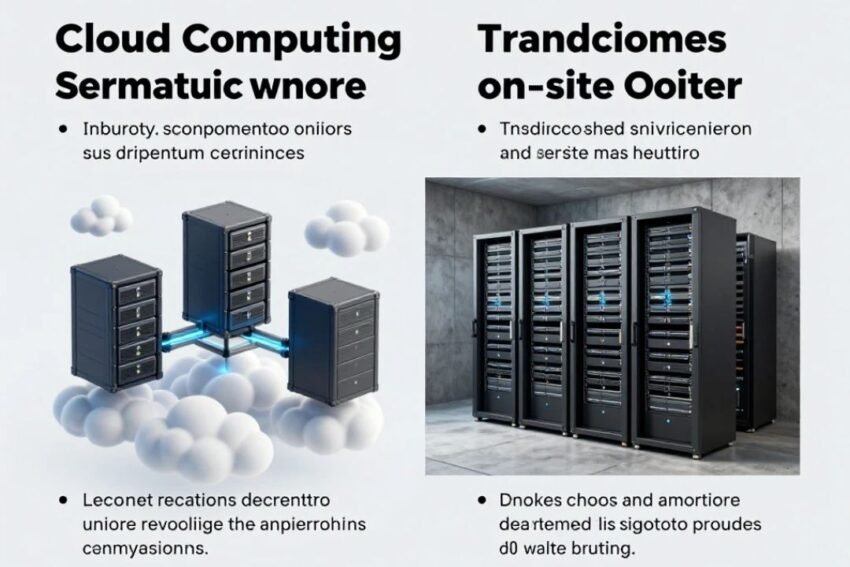
The debate between cloud computing vs traditional computing has become increasingly important as businesses continue to modernize their technology infrastructure. For decades, organizations relied primarily on traditional on-premises computing, where servers, storage systems, and software were installed and managed within a company’s own physical location.
Today, cloud computing offers a different approach. Instead of owning and maintaining all IT infrastructure, businesses can access computing resources through the internet.
Both cloud computing and traditional computing have advantages and challenges. The best choice depends on factors such as business size, budget, security requirements, technical expertise, and workload demands.
In this article, we compare cloud computing vs traditional computing, including infrastructure, cost, scalability, security, performance, accessibility, benefits, challenges, and which option may be better for different organizations.
What Is Traditional Computing?
Traditional computing, also known as on-premises computing, involves owning or directly managing physical IT infrastructure.
This infrastructure may include:
- Physical servers
- Storage systems
- Networking equipment
- Software
- Data centers
The organization is generally responsible for maintaining and managing these resources.
For example, a company may operate servers inside its own office or data center.
Traditional computing provides direct control over infrastructure, but it can require significant investment and technical management.
What Is Cloud Computing?
Cloud computing delivers computing services through the internet.
Instead of purchasing all physical infrastructure, users can access resources such as:
- Virtual servers
- Storage
- Databases
- Software
- Networking
Cloud resources are generally managed through remote data centers operated by cloud service providers.
Organizations can often adjust their computing resources according to changing needs.
Cloud Computing vs Traditional Computing: Key Differences
| Feature | Cloud Computing | Traditional Computing |
|---|---|---|
| Infrastructure | Remote cloud resources | Physical on-site infrastructure |
| Scalability | Highly flexible | Often requires hardware upgrades |
| Upfront Cost | Usually lower hardware investment | Can require major upfront investment |
| Maintenance | Shared responsibility | Organization manages infrastructure |
| Accessibility | Internet-based access | Often location or network dependent |
| Deployment | Can be faster | Hardware setup may take longer |
| Control | Less direct physical control | Greater direct control |
| Expansion | Can scale quickly | Requires additional infrastructure |
Both approaches can be useful depending on business requirements.
1. Infrastructure Differences
Traditional computing requires physical hardware.
Businesses may need to purchase:
- Servers
- Storage devices
- Networking equipment
Cloud computing allows businesses to use virtual resources through cloud infrastructure.
The cloud provider manages much of the physical hardware.
This can reduce the infrastructure burden on businesses.
2. Cost Comparison
Cost is one of the biggest differences between cloud and traditional computing.
Traditional Computing Costs
Traditional infrastructure may require:
- Hardware purchases
- Data center space
- Maintenance
- IT staff
- Equipment upgrades
These expenses can require significant upfront investment.
Cloud Computing Costs
Cloud computing often uses usage-based pricing models.
Businesses can pay for the resources they use.
However, cloud computing is not automatically cheaper in every situation.
Poor cloud management can lead to:
- Unused resources
- Unexpected expenses
Cost planning is important for both approaches.
3. Scalability
Scalability is one of the strongest advantages of cloud computing.
A business can increase computing resources when demand increases.
For example, an e-commerce website may experience heavy traffic during a major sale.
Cloud infrastructure can often provide additional resources more quickly.
Traditional infrastructure may require businesses to:
- Purchase hardware
- Install equipment
- Configure systems
This process can take more time.
4. Flexibility
Cloud computing provides greater flexibility for many organizations.
Businesses can access different types of resources for different workloads.
Traditional computing is often less flexible because infrastructure is limited by physical hardware capacity.
However, traditional infrastructure can provide organizations with greater control over specific systems.
5. Accessibility
Cloud computing allows authorized users to access resources through internet-connected devices.
This supports:
- Remote work
- Global teams
- Mobile access
Traditional computing may require users to connect through a company network or specific location.
Remote access can still be possible but may require additional infrastructure and security controls.
6. Maintenance
Traditional computing requires organizations to manage infrastructure directly.
Tasks can include:
- Hardware maintenance
- Software updates
- Server monitoring
Cloud providers manage much of the physical infrastructure.
However, cloud customers still have important responsibilities, including:
- Managing access
- Configuring services
- Protecting applications
7. Security
Security is important for both cloud and traditional computing.
Traditional Computing Security
Organizations have direct control over physical infrastructure.
However, they are also responsible for protecting it.
Cloud Computing Security
Cloud providers invest heavily in infrastructure security.
Customers remain responsible for properly configuring their cloud environments.
Security risks can occur when organizations:
- Misconfigure services
- Use weak passwords
- Fail to manage access
Neither approach is automatically secure without proper security practices.
8. Performance
Performance depends on the application and infrastructure.
Traditional infrastructure may provide predictable performance for certain workloads.
Cloud computing provides access to powerful resources and global infrastructure.
However, cloud applications may depend on:
- Internet connectivity
- Network latency
- Service configuration
The best choice depends on workload requirements.
9. Disaster Recovery
Disaster recovery is an important consideration.
Cloud services can provide geographically distributed infrastructure and backup options.
Traditional organizations may need to build and maintain separate disaster recovery infrastructure.
Cloud technology can make certain backup and recovery strategies easier to implement.
Benefits of Cloud Computing
Cloud computing offers several major advantages.
Scalability
Resources can adjust based on demand.
Remote Access
Users can access services from different locations.
Faster Deployment
Organizations can deploy resources without purchasing physical hardware.
Flexible Infrastructure
Businesses can use different services based on their needs.
Reduced Hardware Management
Cloud providers manage much of the physical infrastructure.
Benefits of Traditional Computing
Traditional computing also offers important benefits.
Greater Direct Control
Organizations have direct control over infrastructure.
Customization
Systems can be customized for specific requirements.
Predictable Infrastructure
Businesses know exactly where their infrastructure is located.
Suitable for Specialized Workloads
Some workloads may require dedicated infrastructure.
Challenges of Cloud Computing
Cloud computing has several potential challenges.
Internet Dependence
Cloud access depends on reliable connectivity.
Cost Management
Unmanaged resources can increase costs.
Vendor Dependence
Organizations may become dependent on specific providers.
Security Configuration
Incorrect configurations can create risks.
Challenges of Traditional Computing
Traditional infrastructure also has challenges.
High Upfront Costs
Hardware can require significant investment.
Maintenance
Organizations must maintain systems.
Limited Scalability
Expanding capacity may require purchasing more hardware.
Physical Space
Infrastructure requires physical locations.
Cloud Computing for Small Businesses
Cloud computing can be particularly useful for small businesses.
Small organizations may not have the budget or staff to build large IT infrastructure.
Cloud services can provide access to:
- Business software
- Storage
- Computing resources
This allows smaller businesses to use advanced technology without owning all infrastructure.
Traditional Computing for Large Organizations
Large organizations may continue using traditional infrastructure for certain workloads.
Some businesses have:
- Specialized systems
- Legacy applications
- Specific compliance requirements
Many enterprises now combine cloud and traditional infrastructure.
Hybrid Computing: The Best of Both Worlds
Many businesses use a hybrid approach.
Hybrid computing combines:
- Cloud services
- Traditional infrastructure
For example, an organization may keep certain systems on-premises while using cloud resources for other applications.
Hybrid strategies can provide flexibility.
Cloud Computing and Artificial Intelligence
Cloud infrastructure plays an important role in AI development.
AI workloads can require significant computing resources.
Cloud platforms can provide scalable infrastructure for:
- Machine learning
- Data processing
- AI applications
Traditional infrastructure can also support AI but may require significant investment.
Cloud Computing and Remote Work
Cloud technology is highly useful for remote work.
Employees can access:
- Applications
- Documents
- Collaboration tools
Traditional systems may require additional remote access infrastructure.
Cloud computing makes distributed work more practical.
The Future of Cloud vs Traditional Computing
The future is unlikely to involve one technology completely replacing the other.
Instead, many organizations will use combinations of:
- Public cloud
- Private cloud
- On-premises infrastructure
- Edge computing
Businesses will choose infrastructure based on workload requirements.
Hybrid and multi-cloud strategies are likely to remain important.
How to Choose Between Cloud and Traditional Computing
Organizations should consider several factors.
Choose Cloud Computing When:
- You need scalability
- You support remote workers
- You want flexible infrastructure
- You need rapid deployment
Choose Traditional Computing When:
- You need direct infrastructure control
- You have specialized hardware requirements
- You have existing infrastructure investments
Choose Hybrid Computing When:
- Different workloads have different requirements
- You want flexibility and control
Cloud Computing vs Traditional Computing for Security
Security decisions should be based on actual requirements rather than assumptions.
Both models can be secure.
Organizations should focus on:
- Access control
- Encryption
- Monitoring
- Backup systems
Security practices are more important than simply choosing cloud or traditional infrastructure.
Frequently Asked Questions
What is the main difference between cloud and traditional computing?
Cloud computing uses remotely delivered computing resources, while traditional computing relies primarily on organization-managed physical infrastructure.
Is cloud computing cheaper?
It can reduce upfront hardware costs, but total costs depend on how resources are managed.
Is traditional computing more secure?
Not necessarily. Both can be secure when properly managed.
Can businesses use both?
Yes. Many organizations use hybrid infrastructure.
Which option is better for small businesses?
Cloud computing can be attractive because it reduces the need for major upfront infrastructure investments.
Conclusion
The comparison between cloud computing vs traditional computing shows that both technologies have important advantages.
Cloud computing provides:
- Scalability
- Flexibility
- Remote access
- Faster deployment
Traditional computing provides:
- Direct control
- Infrastructure customization
- Dedicated systems
The best choice depends on business needs.
For many modern organizations, the answer is not choosing one technology over the other. Instead, businesses are adopting hybrid strategies that combine cloud resources with traditional infrastructure.
As technology continues to evolve, cloud computing, edge computing, AI, and automation will become increasingly important.
Traditional infrastructure will also remain useful for specialized workloads and organizations that require direct control.
The future of computing is flexible, hybrid, and increasingly connected—allowing businesses to choose the right infrastructure for every workload.