Introduction
5G networking trends in 2026 are shaping the future of communication, business, and digital technology. While 5G is widely known for faster mobile internet, its real impact goes far beyond smartphones and downloads.
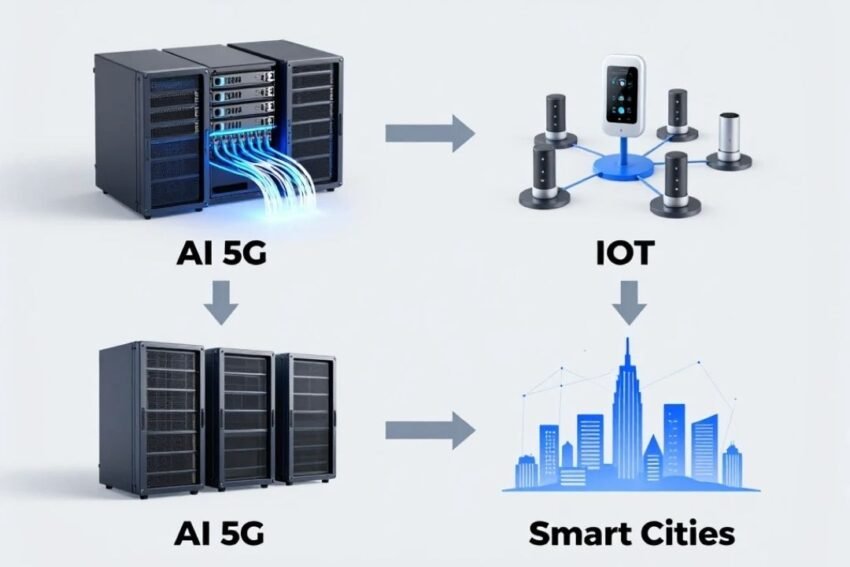
Modern 5G networks are becoming an important foundation for technologies such as Artificial Intelligence (AI), the Internet of Things (IoT), smart cities, edge computing, connected vehicles, cloud platforms, industrial automation, and advanced digital services.
As more devices become connected, traditional network infrastructure faces increasing pressure. Businesses and consumers now rely on smartphones, smart home devices, sensors, cloud applications, security systems, and intelligent machines.
5G is designed to help support this growing connected ecosystem by offering improved speed, lower latency, greater network capacity, and more efficient communication.
In this article, we explore the top 5G networking trends in 2026, including AI-powered networks, IoT expansion, smart cities, edge computing, private 5G, cybersecurity, connected transportation, and the future of wireless technology.
What Is Driving 5G Networking Growth?
Several major trends are increasing demand for advanced wireless connectivity.
These include:
- Growth of Artificial Intelligence
- Expansion of IoT devices
- Cloud computing
- Smart-home technology
- Connected transportation
- Industrial automation
- Remote work
- Video streaming
- Cloud gaming
Modern digital systems generate and exchange enormous amounts of information.
Networks must therefore support:
- Higher data traffic
- More connected devices
- Faster communication
- Greater reliability
This is why 5G is becoming increasingly important for the digital economy.
1. AI-Powered 5G Networks
One of the biggest 5G networking trends in 2026 is the growing use of Artificial Intelligence in network management.
Modern telecommunications networks are highly complex.
They must manage:
- Millions of connected devices
- Network traffic
- Signal quality
- Infrastructure
- Security
AI can help network operators analyze large amounts of data and make network operations more efficient.
How AI Can Improve 5G Networks
AI can potentially support:
- Network traffic management
- Performance optimization
- Predictive maintenance
- Security monitoring
- Resource allocation
For example, AI systems can analyze network patterns and identify potential issues before they become major problems.
This can help improve reliability and reduce downtime.
The Future of AI in Networking
As networks become more advanced, AI is expected to become increasingly important.
Future networks may use more automated systems capable of adjusting network resources based on changing demand.
2. Massive Growth of IoT Devices
The Internet of Things (IoT) continues to grow rapidly.
IoT refers to physical devices connected to networks.
Examples include:
- Smart cameras
- Smart thermostats
- Connected appliances
- Industrial sensors
- Smart meters
- Wearable devices
5G is designed to support large numbers of connected devices.
This makes it useful for expanding IoT ecosystems.
Why IoT Needs Advanced Networks
As more devices become connected, networks need to handle greater communication demands.
5G can support:
- Large-scale device connectivity
- Faster communication
- Advanced industrial systems
The growth of IoT is expected to remain one of the most important drivers of 5G development.
3. Smart Cities and Connected Infrastructure
Smart cities are becoming one of the most exciting applications of advanced networking technology.
A smart city uses connected systems to improve infrastructure and public services.
Possible applications include:
- Smart traffic management
- Connected street lighting
- Environmental monitoring
- Public transportation systems
- Energy management
- Public safety technology
Sensors can collect information about different parts of a city.
This data can then be analyzed to help improve decision-making.
5G and Smart Traffic
Connected systems may help monitor traffic conditions.
Potential benefits include:
- Improved traffic management
- Better transportation planning
- Reduced congestion
However, smart-city systems must also address cybersecurity and privacy concerns.
4. Edge Computing and 5G
Edge computing is becoming increasingly important alongside 5G.
Traditional cloud computing often processes information in distant data centers.
Edge computing moves some processing closer to the source of the data.
This can reduce the distance information must travel.
Potential benefits include:
- Faster response times
- Reduced latency
- Improved efficiency
5G and Edge Computing Together
The combination of 5G and edge computing can support applications requiring fast communication.
Examples include:
- Industrial automation
- Smart systems
- Connected devices
- Augmented Reality
This combination is expected to become more important in the future.
5. Private 5G Networks
Private 5G networks are another major trend.
A private network is designed for a specific organization or location.
Potential users include:
- Factories
- Warehouses
- Airports
- Universities
- Large businesses
Benefits of Private 5G
Organizations may benefit from:
- Greater network control
- Dedicated connectivity
- Support for connected equipment
- Industrial automation
Private 5G can be especially useful in environments with large numbers of connected machines and sensors.
6. 5G and Industrial Automation
Modern factories are becoming increasingly automated.
Industrial systems can include:
- Robots
- Sensors
- Automated machines
- Connected equipment
5G can support wireless communication in certain industrial environments.
Smart Manufacturing
Smart factories may use connected technology for:
- Real-time monitoring
- Predictive maintenance
- Automation
- Data collection
For example, sensors can monitor equipment and identify potential problems.
AI systems may then analyze the data and help predict maintenance requirements.
7. Connected Vehicles and Transportation
Connected transportation is another important 5G trend.
Modern vehicles increasingly use digital systems for:
- Navigation
- Traffic information
- Vehicle monitoring
Future transportation systems may involve communication between vehicles, infrastructure, and cloud platforms.
Potential applications include:
- Real-time traffic updates
- Connected navigation
- Vehicle communication
Safety-critical vehicle systems require strong cybersecurity and reliable engineering safeguards.
8. 5G and Artificial Intelligence
AI requires data, computing power, and connectivity.
5G can help connect AI systems with:
- Cameras
- Sensors
- Devices
- Cloud platforms
AI can also help optimize 5G networks.
This creates a powerful relationship:
5G supports AI applications, while AI helps improve 5G networks.
This combination could become increasingly important in future digital infrastructure.
9. Smart Homes and Consumer IoT
Smart-home technology continues to expand.
Modern homes can include:
- Smart speakers
- Connected cameras
- Smart locks
- Smart lighting
- Smart appliances
5G and other advanced connectivity technologies can support growing numbers of connected devices.
The future may involve more intelligent homes that use AI to automate everyday tasks.
10. Cloud Gaming and Mobile Entertainment
Entertainment is another area benefiting from advanced networking.
5G can potentially improve:
- Mobile gaming
- Cloud gaming
- Video streaming
- Interactive entertainment
Cloud Gaming
Cloud gaming allows games to run on remote servers.
Video is then streamed to the user’s device.
Fast and reliable connectivity can improve the experience.
However, performance also depends on:
- Server location
- Network quality
- Device capabilities
11. Virtual Reality and Augmented Reality
VR and AR technologies require significant processing and data communication.
5G can potentially support:
- Cloud-assisted VR
- Interactive AR
- Remote collaboration
- Immersive entertainment
Lower latency is particularly important for interactive experiences.
Future AR devices may become increasingly connected to cloud and edge computing systems.
12. 5G Cybersecurity
Cybersecurity is becoming increasingly important as more devices connect to networks.
Potential risks include:
- Unauthorized access
- Data theft
- Malware
- Vulnerable IoT devices
- Network attacks
A larger connected ecosystem can create more potential attack surfaces.
Improving 5G Security
Organizations should focus on:
- Strong authentication
- Encryption
- Secure device management
- Software updates
- Network monitoring
Cybersecurity must remain a major priority as 5G infrastructure expands.
13. Network Slicing
Network slicing is an advanced technology associated with modern networking.
It allows a physical network to support multiple virtual network services.
Different applications can have different requirements.
For example:
Gaming
May prioritize low latency.
Businesses
May prioritize reliability.
IoT Systems
May require support for large numbers of devices.
Network slicing can help networks become more flexible.
14. Massive MIMO and Beamforming
5G networks use advanced antenna technologies.
Massive MIMO
Massive MIMO uses large numbers of antennas to improve network capacity and efficiency.
Beamforming
Beamforming helps direct wireless signals more efficiently toward users or devices.
Potential benefits include:
- Better signal quality
- Improved efficiency
- Reduced interference
These technologies are important components of advanced wireless networking.
15. 5G-Advanced Technology
5G technology continues to evolve.
5G-Advanced represents the next stage of development within the 5G ecosystem.
Future improvements may focus on:
- Better network performance
- Improved efficiency
- Advanced automation
- Greater AI integration
5G-Advanced can help prepare networks for future communication technologies.
16. Sustainability and Energy Efficiency
Energy efficiency is becoming an increasingly important issue.
Telecommunications networks require:
- Network equipment
- Data centers
- Wireless infrastructure
Future networks will need to improve energy efficiency while supporting growing amounts of data traffic.
AI may also help optimize energy use by managing network resources more efficiently.
17. Satellite and Non-Terrestrial Connectivity
Traditional networks rely heavily on ground-based infrastructure.
Future communication systems may increasingly integrate:
- Satellites
- Non-terrestrial networks
- Advanced wireless infrastructure
This could help improve connectivity in remote locations.
Satellite connectivity may become an increasingly important part of the global communication ecosystem.
18. 5G and Remote Work
Remote work continues to influence technology.
Employees increasingly rely on:
- Video conferencing
- Cloud applications
- Online collaboration
Advanced wireless connectivity can support people who work outside traditional offices.
5G may improve access to high-speed mobile internet in areas with suitable coverage.
19. Expansion of 5G Coverage
One of the most important trends is continued infrastructure development.
As operators expand networks, more users may gain access to 5G connectivity.
However, coverage can vary significantly.
Factors include:
- Location
- Infrastructure investment
- Population density
- Network operator
Expanding reliable connectivity remains a major goal.
20. The Road Toward 6G
While 5G continues expanding, researchers are already exploring future generations of wireless technology.
Possible research areas include:
- AI-native networks
- Advanced sensing
- Improved satellite integration
- Higher-speed communication
6G remains a future concept, but research is helping shape long-term communication technology.
Benefits of 5G Networking in 2026
The major benefits of 5G include:
Faster Connectivity
Supports data-intensive applications.
Lower Latency
Important for real-time communication.
Greater Capacity
Supports growing numbers of connected devices.
Better IoT Support
Helps connect large device ecosystems.
Advanced Business Applications
Supports automation and digital transformation.
Challenges Facing 5G
Despite its advantages, several challenges remain.
Infrastructure Costs
Network expansion requires significant investment.
Coverage Gaps
Some areas still have limited access.
Cybersecurity
More connected devices can increase security risks.
Device Compatibility
Users need compatible devices.
Energy Consumption
Networks need to become more energy-efficient.
How Businesses Can Prepare for 5G
Businesses should consider how 5G can support their technology strategies.
Identify Use Cases
Evaluate opportunities in:
- Automation
- IoT
- Cloud computing
- Remote work
Improve Cybersecurity
Connected systems need strong security.
Develop Digital Skills
Important areas include:
- AI
- Networking
- Cybersecurity
- IoT
- Cloud computing
Build a Long-Term Strategy
5G should support broader digital transformation goals.
Frequently Asked Questions
What are the biggest 5G trends in 2026?
Major trends include AI-powered networking, IoT growth, smart cities, edge computing, private 5G, cybersecurity, and connected transportation.
How is AI changing 5G?
AI can help optimize networks, manage traffic, monitor security, and predict maintenance needs.
Why is 5G important for IoT?
5G is designed to support large numbers of connected devices and advanced communication systems.
What is private 5G?
Private 5G is a dedicated network designed for a specific organization or location.
Will 5G lead to 6G?
5G will continue evolving, while research into future technologies such as 6G is already underway.
Conclusion
The top 5G networking trends in 2026 demonstrate that the future of connectivity is becoming faster, smarter, and more connected.
5G is no longer simply about improving smartphone internet speeds. It is becoming an important foundation for Artificial Intelligence, IoT, smart cities, edge computing, cloud services, industrial automation, connected transportation, and immersive technology.
AI-powered networks can help manage complex communication systems. IoT devices are creating massive connected ecosystems. Smart cities are using sensors and digital infrastructure to improve services. Edge computing is helping reduce latency by processing information closer to users and devices.
Private 5G networks are also creating new opportunities for businesses and industries that need specialized wireless connectivity.
However, challenges involving cybersecurity, infrastructure costs, coverage gaps, and energy consumption must continue to be addressed.
As 5G evolves into more advanced forms of networking, technologies such as AI, automation, edge computing, satellites, and advanced IoT systems will become increasingly connected.
The future of communication is moving toward a world where billions of devices, machines, and people can communicate more efficiently.
5G networking is helping build that future—creating the digital infrastructure needed for smarter cities, intelligent businesses, connected devices, and the next generation of technology.